What Should Rabbits Eat? A Simple Guide to Healthy Rabbit Nutrition
Good nutrition is one of the most important parts of rabbit care.
Rabbits have sensitive digestive systems and need a diet that is high in fibre, consistent, and suited to their natural feeding habits.
While feeding routines may vary depending on age, size, breed, and health, the basic principles of rabbit nutrition remain the same.
1. Hay Should Be the Foundation
Hay should make up the largest part of a rabbit’s diet.
It provides the fibre rabbits need to support healthy digestion and also helps with natural tooth wear.
Good hay should be:
- clean
- dry
- fresh-smelling
- free from mould
- stored in a dry place
Rabbits should have access to hay throughout the day.
A hay feeder can help keep hay cleaner and reduce waste.
2. Fresh Water Is Essential
Clean drinking water should always be available.
Rabbits can drink from bowls, bottles, or nipple watering systems depending on the setup.
Whichever system you use, check it daily to make sure:
- the water is fresh
- the container is clean
- the system is not blocked
- there are no leaks
For larger rabbit setups, a reliable watering system can make daily care more efficient.
3. Use Rabbit Pellets in the Right Amount
Rabbit pellets can be a useful part of a balanced diet, but they should not replace hay.
Choose pellets that are specifically designed for rabbits.
The amount fed may depend on:
- age
- size
- activity level
- health
- breeding status
Avoid overfeeding pellets, as this can reduce hay intake and affect overall diet balance.
4. Fresh Greens Can Add Variety
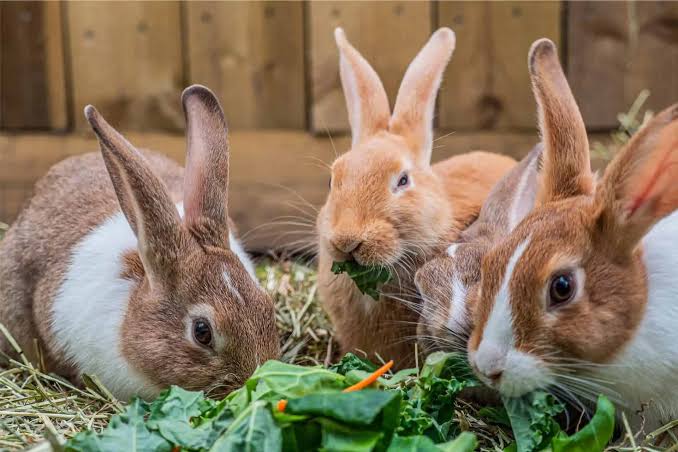
Suitable leafy greens can form part of a rabbit’s diet.
Examples may include:
- romaine lettuce
- coriander
- parsley
- basil
- rocket
- selected leafy vegetables
Introduce new foods slowly and in small amounts.
Sudden dietary changes can upset a rabbit’s digestive system.
Always make sure fresh produce is clean before feeding.
5. Fruit and Treats Should Be Limited
Fruit contains natural sugar, so it should be given only in small amounts.
Examples may include small portions of:
- apple
- pear
- berries
- banana
Treats should be occasional rather than a daily part of the diet.
Too many sugary foods can contribute to digestive and weight problems.
6. Avoid Sudden Diet Changes
Rabbits respond best to a consistent feeding routine.
If you need to change pellets, hay, or other foods, introduce the new option gradually.
A slow transition gives the digestive system time to adjust.
Watch for changes in:
- appetite
- droppings
- energy levels
- drinking habits
If anything changes significantly, take it seriously.
7. Foods to Avoid
Some foods are not suitable for rabbits.
Avoid feeding:
- chocolate
- sweets
- processed human snacks
- onions
- garlic
- avocado
- highly sugary foods
- mouldy or spoiled food
If you are unsure whether a food is safe, it is better to check before offering it.
8. Feeding Equipment Matters Too
Good feeding equipment can help keep food cleaner and make daily care easier.
Useful items may include:
- hay feeders
- pellet feeders
- water bowls
- nipple watering systems
- storage containers
Keeping feeding areas clean also helps reduce waste and contamination.
Final Thoughts
A healthy rabbit diet should focus on fibre, fresh water, suitable pellets, and carefully selected greens.
Hay should remain the main part of the diet, while pellets and fresh foods should be offered in suitable amounts.
Consistency is important, and any changes should be introduced gradually.
At Nibblers World, we offer rabbit feeders, watering systems, hay feeders, accessories, and other products designed to support practical and organised rabbit care.